
The Fifty State Consumer Story
What does housing cost relative to income? How are utility and insurance bills changing? Which employers depend on exports or visitors? Who can get to work, child care and health care? What did lawmakers actually enact, and when did it take effect?


From a farm field to a hotel room, the national economy reaches households through very different local markets.
Every state has a consumer economy. No two experience it in exactly the same way.
A family in Iowa may feel changes in farm income through a local equipment dealer. A household in Nevada may depend on a tourism paycheck while also facing housing costs. In Florida and California, consumers share many of the same pressures, even though their state governments and economic conditions differ. The question for each governor is how national forces arrive at the front door of a particular community.
The Bureau of Economic Analysis gives us one starting point. Personal consumption expenditures increased in all 50 states and the District of Columbia in 2025. The increase ranged from 7.0 percent in Florida to 4.2 percent in California. These figures are in current dollars, without an inflation adjustment: higher spending can reflect higher prices, population changes or more purchases. It does not, by itself, mean families were better off or bought more goods. The figures describe the year before this election, not the effect of its results.
Housing and utilities, along with health care, were among the largest contributors to the national increase in spending. That makes the governor’s role tangible. A state may influence housing supply through legislation and infrastructure spending; utility oversight through its regulatory system; and health costs through insurance rules, public programs and budget decisions. Local zoning, federal programs, interest rates and private markets matter too. None of those levers works overnight.
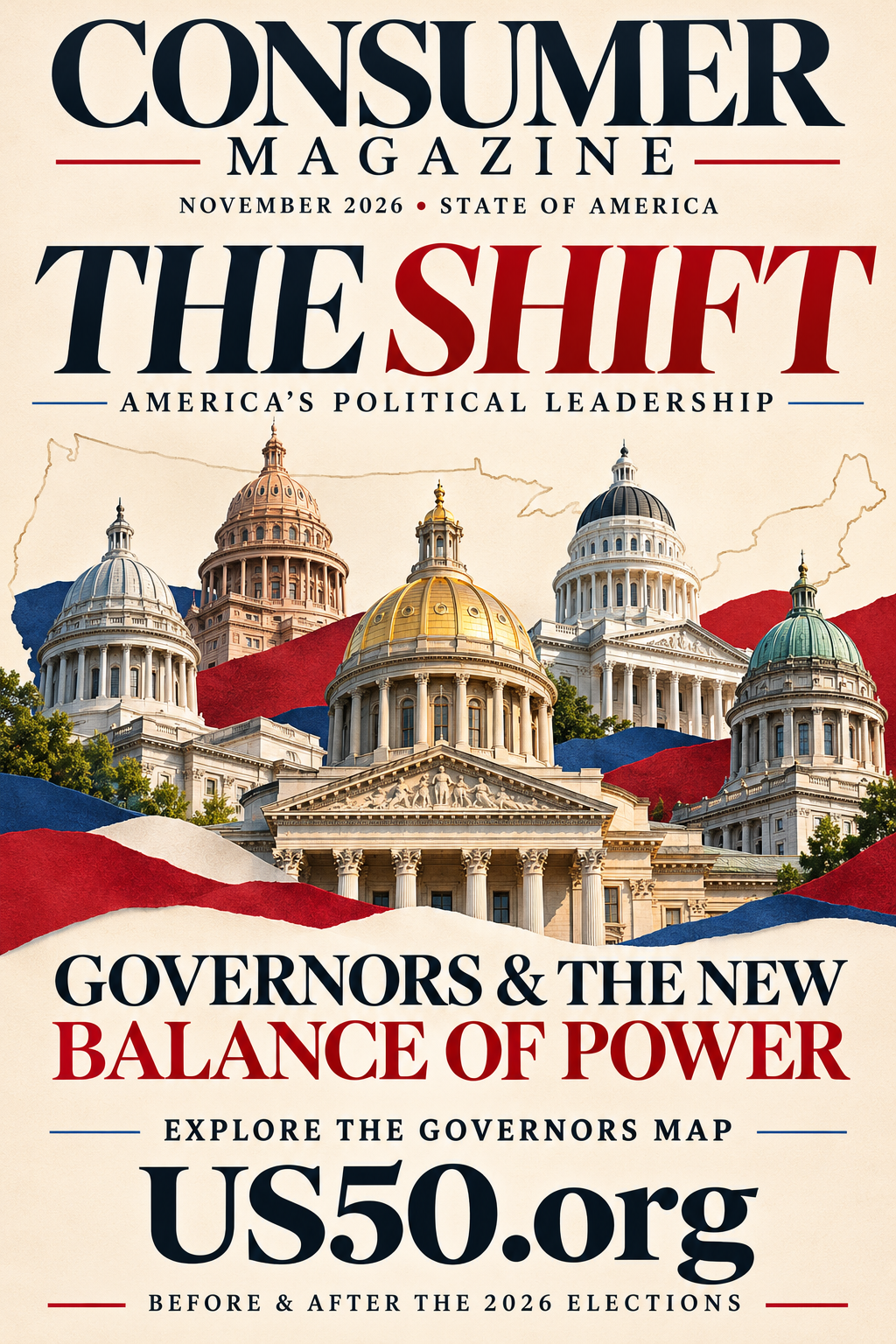
Consider five ways to read the next statehouse agenda.
In Iowa, where Democrat Rob Sand won the governor’s race, agriculture and the businesses that serve it connect local families to buyers around the world. The U.S. Department of Agriculture lists Iowa among the states near the top in agricultural export earnings. Foreign demand, input costs and retaliatory trade measures can affect farm income, while a governor’s influence is strongest in state-level decisions such as infrastructure, workforce development and business assistance. A change in governor does not itself change a federal tariff.
In Nevada, where Democrat Aaron Ford won the governor’s race, the visitor economy reaches far beyond a casino floor. Travel Nevada estimates that outdoor recreation generated nearly $1.7 billion in visitor spending in 2025. Those dollars can support lodging, food service, transportation and local businesses. Housing, water and dependable public services matter to the workers who make a visitor economy possible.
In Ohio, where Democrat Amy Acton won, manufacturers and their suppliers have reason to watch both the price of imported components and access to export markets. A protective tariff can benefit some domestic producers while raising costs for businesses that purchase affected imports. Which effect dominates depends on the product, the firm and the response of trading partners.
In Georgia, where Democrat Keisha Lance Bottoms won, and Texas, where Democrat Gina Hinojosa won, fast-changing communities must be served by systems people use every day: schools, roads, housing and health care. Their priorities will have to move through different legislatures and budgets. Meanwhile, in Florida, Republican governor-elect Byron Donalds campaigned on affordability while promising to continue a conservative approach. Consumer costs are not an issue owned by one party.
A useful 50-state comparison should therefore ask the same questions without assuming the same answers: What does housing cost relative to income? How are utility and insurance bills changing? Which employers depend on exports or visitors? Who can get to work, child care and health care? What did lawmakers actually enact, and when did it take effect?
US50.org can help readers follow the changing governor map. Federal state spending data and state budget records can help explain what happens next. Together they offer a way to hold leaders accountable for conditions in the communities they serve.
Sources and further reading
Bureau of Economic Analysis: Consumer spending in all 50 states
Bureau of Economic Analysis: State consumer spending data
USDA: Agricultural exports by state
Travel Nevada: Outdoor visitor spending in 2025
International Trade Administration: State trade and economy factsheets
Federal Reserve research: Tariffs and retail prices in 2025
Ballotpedia: Governor race results as of Nov. 4
Georgia Public Broadcasting and NPR: Historic governor races


