
The Shift Across America
Democrats flipped governorships in Georgia, Iowa, Nevada, Ohio and Texas, according to news reports. In a November 4 snapshot of the 36 races on the ballot, Ballotpedia counted 22 Democratic and 12 Republican winners, with two contests uncalled.


Cover Feature
A new balance of state power puts the cost of living, economic opportunity and the meaning of representation on the governors’ agenda.
The map of American political leadership is changing. The bills on the kitchen table are not waiting for the new governors to take office.
On November 3, voters in 36 states chose governors. Fourteen states did not have a governor’s race this year, although their residents remain part of the national consumer economy and their current leaders continue to make consequential decisions. Across the country, the emerging results show significant Democratic gains, while several contests still require more counting.
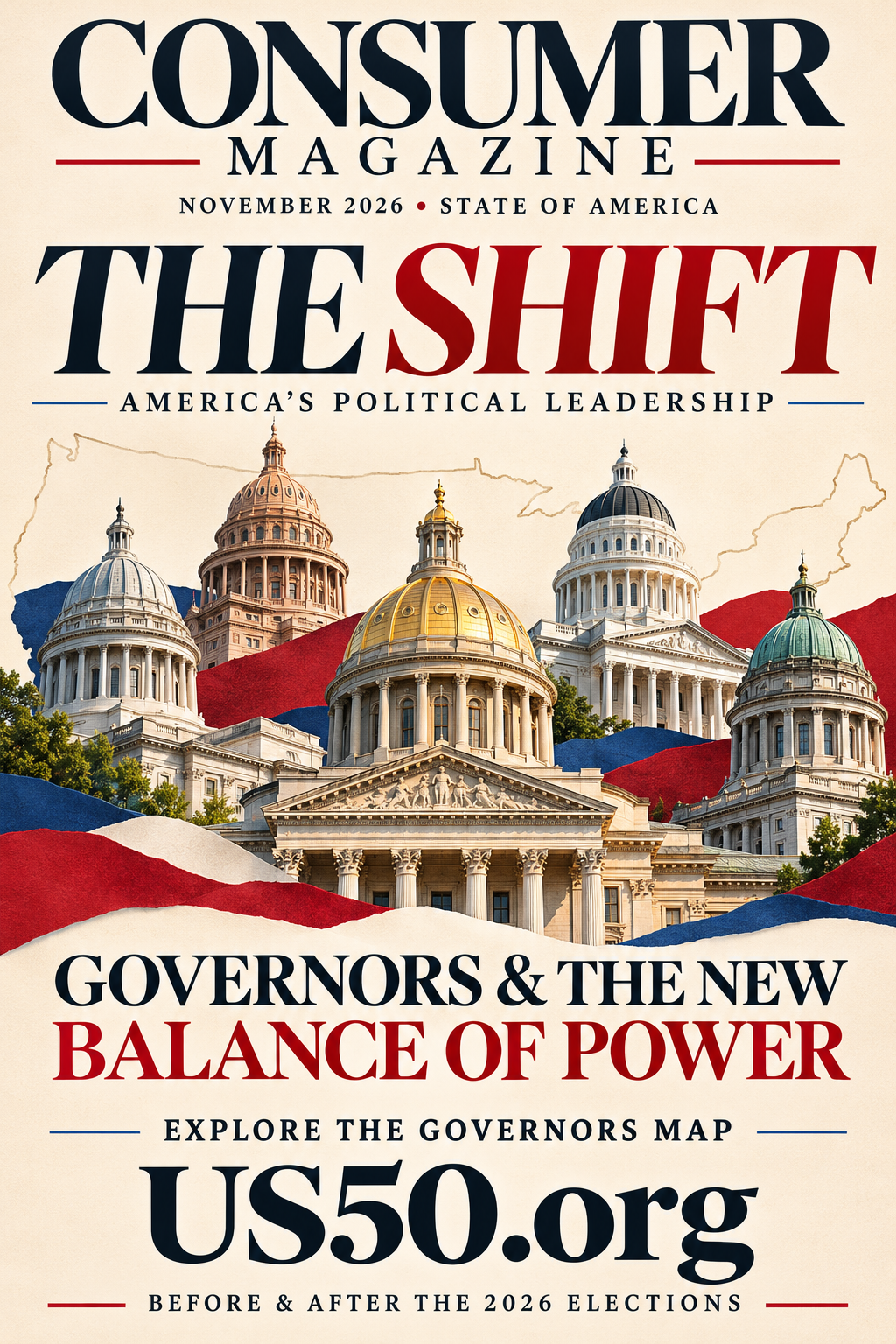
Democrats flipped governorships in Georgia, Iowa, Nevada, Ohio and Texas, according to news reports. In a November 4 snapshot of the 36 races on the ballot, Ballotpedia counted 22 Democratic and 12 Republican winners, with two contests uncalled. Those race totals exclude the 14 governors whose seats were not on the ballot; they do not mean new governors have already taken office. As of 4 p.m. Eastern on November 4, the Associated Press had not called the races in Alaska or Kansas. Other trackers may make calls on different schedules, and results remain unofficial until states certify them.
The direction of the shift is clear enough to invite a question that matters beyond campaign headquarters: What will a different balance of power mean to the people who buy groceries, pay rent, run businesses and raise families in these states?
The answer will unfold through budgets and laws, not the color of a map alone. Governors can propose spending plans, sign or veto legislation, appoint officials and influence education, transportation, health programs and economic development. State legislatures, federal law, local governments and courts also shape what is possible. A promise on election night does not automatically become a lower utility bill in January.
Still, the economic message was hard to miss. In the AP Voter Poll, more than half of voters nationally said government corruption was crucial to their vote for Congress; slightly fewer said the same about the cost of living. About six in 10 said they were personally very concerned about the price of food and groceries. That is a national survey about congressional voting, not a finding that voters in every state chose a governor for the same reason.
The pressure on families stretches across party lines. A Republican household and a Democratic household can disagree strongly about government while both worrying about a rent increase. A business owner may welcome one proposal on taxes and oppose another on immigration. Voters made choices among candidates, records, personal priorities and local conditions; no ballot can reduce all of those decisions to a single explanation.
The results also brought history. Georgia elected Democrat Keisha Lance Bottoms, who is set to become the first Black woman to serve as a state governor. Florida elected Republican Byron Donalds, who is set to become that state’s first Black governor. In New Mexico, Democrat Deb Haaland is set to become the first Native American woman governor. They represent different parties and philosophies, a reminder that Americans who bring different backgrounds to public life do not think alike.
Consumer Magazine’s reading of this election is that opportunity, affordability and belonging belong in the same national conversation. The outcome does not prove that every voter endorsed a particular diversity program. It does demonstrate that Americans continue to elect leaders from different backgrounds and to demand answers to everyday economic problems.
Our cover calls this moment The Shift. Its real measure will be what happens after the swearing-in: whether leaders can make households more secure, help businesses reach customers and build an economy in which more people can participate.
Sources and further reading
Ballotpedia: Governor race results as of Nov. 4
The Wall Street Journal: Five governorships that flipped
AP: Election races still uncalled, Nov. 4
AP Voter Poll: Voter concerns in 2026
AP: Historic election firsts for governors
Georgia Public Broadcasting and NPR: Historic governor races


